How digital ecosystems are reshaping a model that has existed for decades
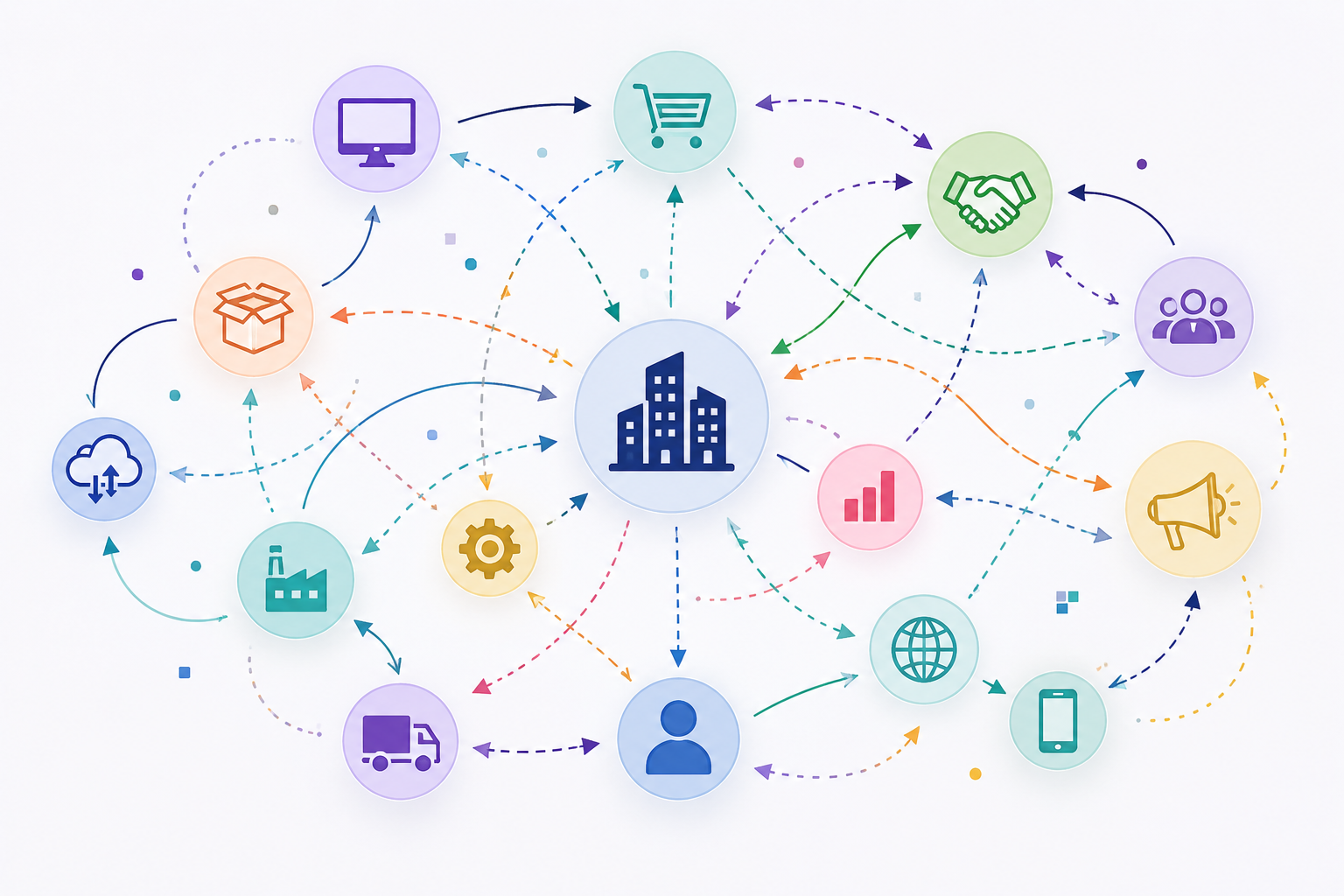
Looking across industries, business models seem to be getting more complex. We’re seeing Fintech embedded in banking platforms, software distributed through marketplaces, and streaming services bundled with telecom providers. In each case, companies are reaching end users through another organization. These complex digital ecosystems feel different than anything we’ve seen before, but the idea itself isn’t new.
Early in my career at Heinz, we were very deliberate about separating the business into B2C and B2B, consumer products vs. foodservice – we were even separated by different floors in our Pittsburgh office building. In reality, both were B2B2C and likely could have benefited from more collaboration and idea sharing.
Whether a customer bought ketchup in a grocery store or used it in a restaurant, the model was the same: we sold to a distributor or retailer, who then sold to the end user. Growth depended on a mix of partner promotion and direct-to-consumer brand building. The customer didn’t experience two different models, they experienced one brand, delivered through different channels. B2B2C has been around for a long time, we just didn’t always call it that.
What’s changed
What has changed is how visible and complex these models have become. In earlier, more traditional industries, the layers of the system seemed relatively stable. Distributors, retailers, and manufacturers each had clearly defined roles. But in my consulting work, and more recently in my role at FinFit, I’ve seen how quickly that simplicity breaks down in digital environments.
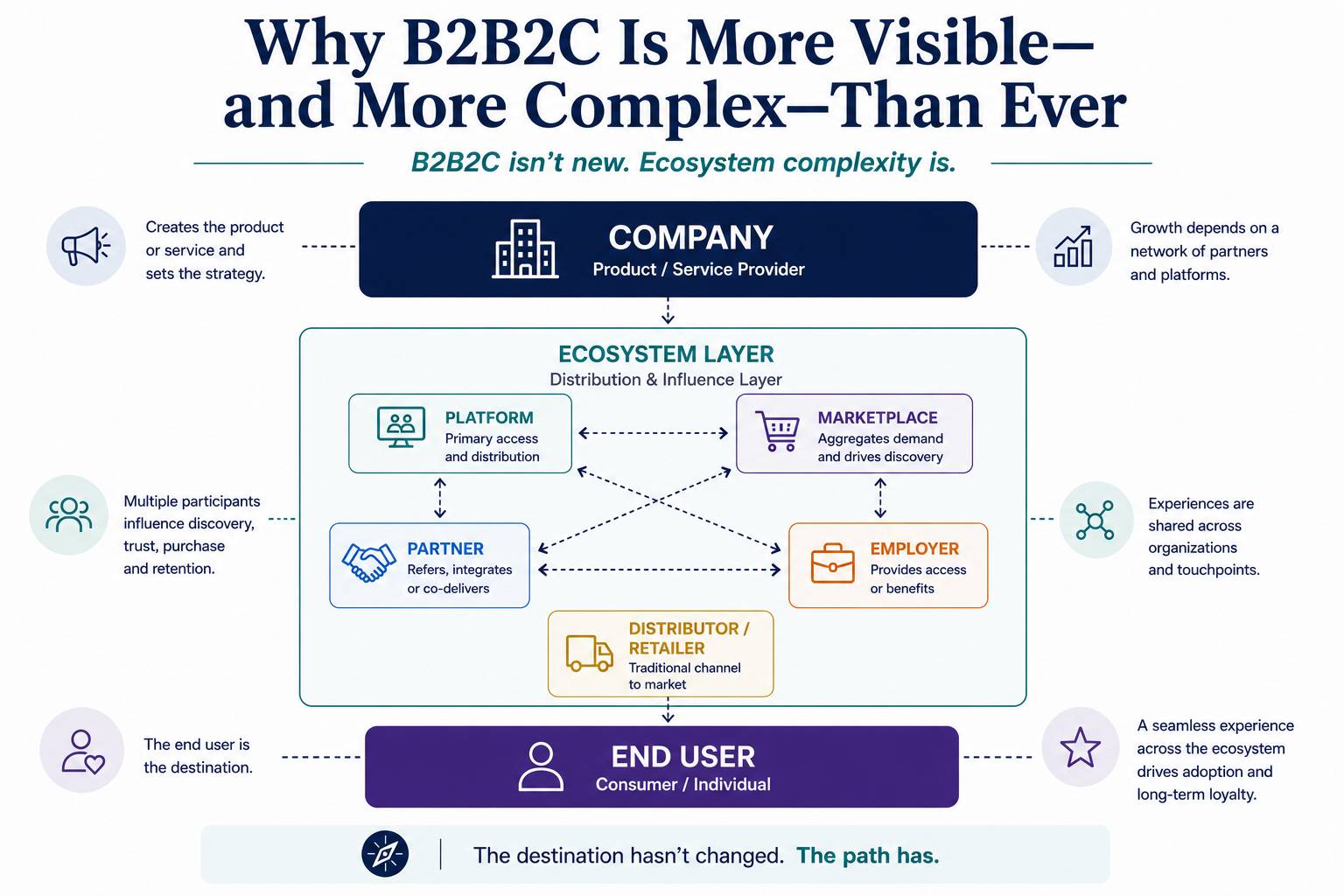
For example, platforms introduce new participants, integrations create new dependencies, and distribution becomes more dynamic and less controlled. What used to be a relatively linear chain has evolved into a multi-layered ecosystem, and that shift is what’s driving the rise of B2B2C today.
Why B2B2C is becoming more prevalent
1. Platforms can serve as a primary point of discovery
In many industries, customers don’t discover or adopt products directly. They access them through platforms, marketplaces, or their employer’s benefit program.
These secondary spaces aggregate demand and act as gatekeepers which can make building direct distribution at scale expensive and slow. Partnering provides access, but significantly changes the model and the communication with the end user.
2. The customer journey is no longer owned by a single company
In case understanding and architecting your customer’s journey wasn’t complex enough, B2B2C models mean that customer experiences are distributed across multiple providers. Discovery may happen through one platform, onboarding through another interface, and ongoing engagement through a combination of partner and provider communications.
That creates a fundamental shift in how growth works. Companies are no longer just responsible for their own product or marketing experience. They also depend on how effectively partners introduce, position, and reinforce the value of the offering within their own ecosystems.
In other words, growth becomes interconnected. Adoption is shaped not only by what your company does well, but by how well multiple organizations work together to create a cohesive experience for the end user.
3. Trust is increasingly inherited
In a B2B2C model, a certain amount of trust is inherited by the partner organization from the larger platform. End users understand that embedded partners have been vetted by the larger organization which can help increase trust and adoption.This shifts trust-building from purely brand-led to ecosystem-led, but also means that building trust at B2B level is the first step in consumer access.
The real implication
B2B2C marketing is not a new model, but it is becoming more visible, more interconnected, and more important to understand. For a long time, many businesses could operate within relatively stable distribution systems without thinking deeply about the complexity behind them. Manufacturers sold to retailers. Platforms connected buyers and sellers. Partners distributed products.
Today, those relationships are more dynamic — and far more intertwined. Platforms influence trust. Partners shape adoption. Customer experiences span multiple organizations instead of one.
As a result, success in B2B2C environments depends on more than simply acquiring customers or signing partners. It requires companies to think in terms of ecosystems: how value is created, reinforced, and delivered across interconnected participants. The challenge isn’t adopting B2B2C. It’s learning how to operate effectively within increasingly complex ecosystems.



Leave a Reply