
For much of my career, I worked in categories where brand preference did the heavy lifting.
In CPG, especially in mature categories, consumers often have strong opinions about brands, even when the products themselves are only marginally different. And yet, brand loyalty is real, powerful, and highly correlated with commercial success.
Brand creates meaning, simplifies choices, and allows businesses upstream to say yes because consumers already have. That mental model works remarkably well…until it doesn’t.
Lately, I’ve been working in a very different kind of B2B2C environment: one where brand awareness is lower, the market is more fragmented, access is constrained, and product differences are not cosmetic, they materially affect outcomes.
And that’s where a paradox starts to show up. In some B2B2C categories, branding thrives precisely because the products are similar and the category has consolidated around a handful of familiar names. In others, the products are genuinely different, but awareness is diffuse, choice is mediated, and brands struggle to gain traction at all.
That tension is what I’ve come to think of as the branding paradox in B2B2C.
When Brand Preference Carries the Weight
In classic CPG-style B2B2C marketing models, brand acts as a shortcut. Consumers don’t need to deeply understand the product. They don’t need to compare features. They rely on familiarity, reputation, emotional cues, and habit.
Because of that, awareness is the primary growth lever, preference can pull demand through the channel, and corporate buyers can say yes, knowing consumers will follow. In these systems, brand reduces cognitive load. It stands in for differentiation. That’s not a criticism, it’s a feature. It’s exactly why branding is so powerful in these categories.
When the Product Is Actually Different
Now contrast that with permission-based B2B2C marketing models, especially in fintech, healthcare, HR tech, or education, where consumers can’t freely choose without eligibility because a business or platform must approve access first. Additionally, quite often, the product meaningfully affects someone’s financial, health, or life outcomes.
Here, the product differences aren’t subtle. They’re structural. And yet, branding often feels weaker. Not because brand doesn’t matter, but because it’s being asked to do a completely different job.
The Branding Paradox
Here’s the paradox in plain terms:
- In CPG, brand helps products win despite limited differentiation
- In permissioned B2B2C, products may be deeply differentiated, but a skillfully crafted brand can’t compensate for lack of access
One of the first things that feels unintuitive in constrained B2B2C marketing ecosystems is that awareness alone doesn’t unlock growth. In fact, it can sometimes backfire.
When consumers learn about a product they genuinely want, but can’t access, it creates friction, frustration, or indifference. Unlike CPG, where awareness assumes availability, permissioned ecosystems require a gate to open before preference can even form.
This is where many traditional marketing instincts break. We’re trained to believe more awareness is always good. But in permission-based B2B2C, awareness without availability doesn’t convert this effort is at best a waste and at worst, creates a negative consumer experience.
Brand as Shortcut vs. Brand as Translator
This is where I find it useful to distinguish between two different roles brand can play.
Brand as Shortcut: “I know this. I trust it. I’ll choose it.”
- Reduces decision effort
- Signals familiarity and trust instantly
- Works best when choice is free and frequent
- Common in mature, low-risk categories
Brand as Translator: “What is this? Is it safe? Why does it matter?”
- Explains why the product exists
- Builds confidence in unfamiliar or sensitive decisions
- Must educate multiple audiences with different incentives
- Common in regulated or permission-based ecosystems
Why This Matters in B2B2C Branding
Most marketers are trained in shortcut branding, but I’ve found fewer are trained in translation branding. Yet, B2B2C increasingly demands the latter. When we apply shortcut-branding playbooks to translator-branding problems, it an lead marketers to overinvest in awareness too early and underestimate the role of access and permission. The result isn’t necessarily bad marketing, but rather misaligned marketing and wasted effort.
A Different Kind of Brand Discipline
In constrained B2B2C marketing models, brand doesn’t replace the product, mask complexity, or create instant preference.
Instead, brand has to:
- Translate real differences clearly
- Build confidence before choice exists
- Serve both the gatekeeper and the end user
- Support long-term adoption, not just initial interest
That’s a harder job. But it’s also a more strategic one.
Branding in a Mediated, Attention-Scarce World
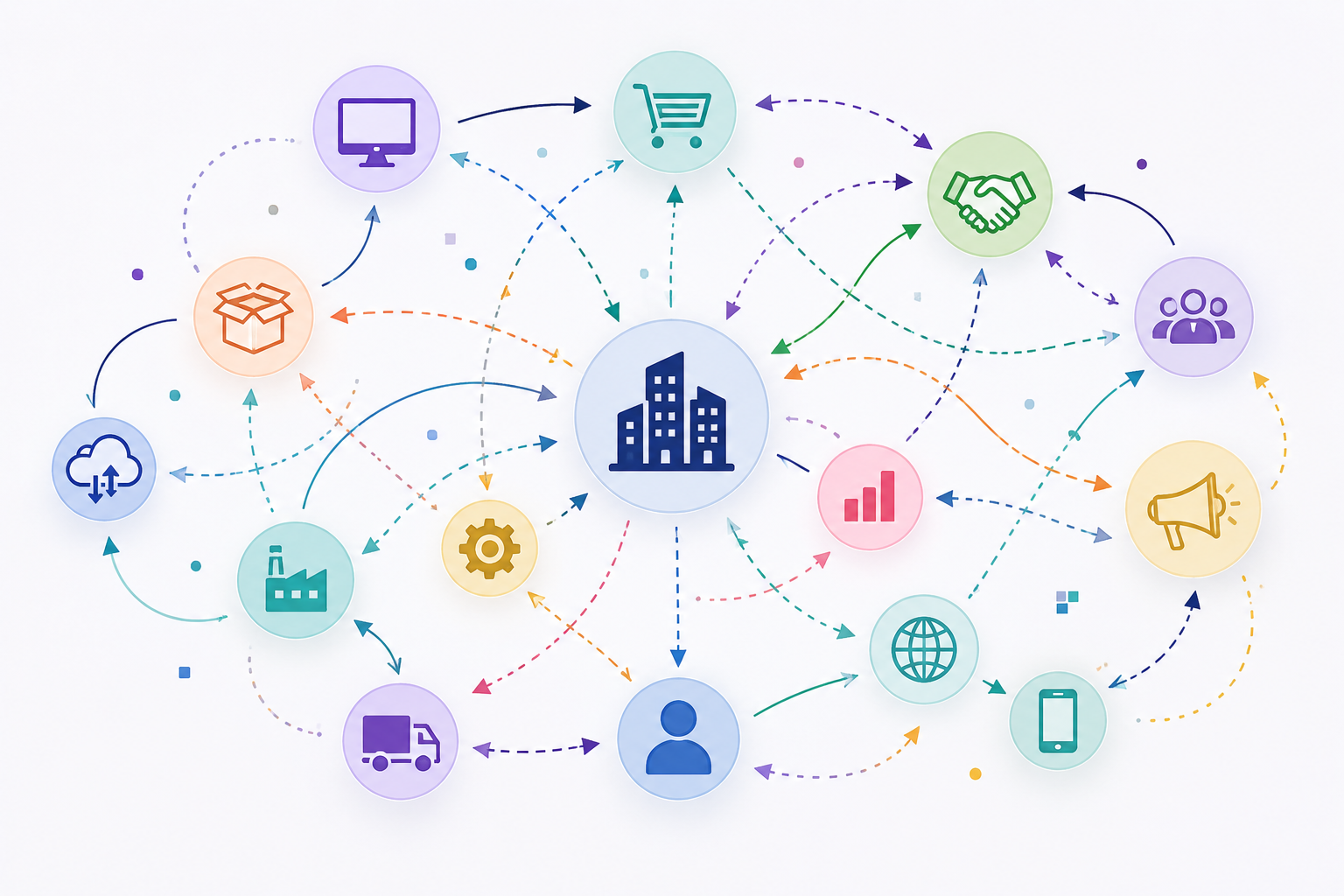
Across industries, macro forces including regulation, platform consolidation, and technology are reshaping how products reach consumers in their personal and professional lives. Where consumers once went to a relatively small number of channels to discover and choose products, today they encounter brands across an expanding web of digital touchpoints.
Technology has made it easier than ever to communicate directly with consumers. It has also made it harder than ever to be heard. Attention is fragmented. Expectations are higher. And consumers are navigating an unprecedented volume of marketing messages, often without any guarantee that they can actually access the product being promoted.
At the same time, access itself has become more centralized. Platforms, employers, ecosystems, and eligibility rules increasingly sit between awareness and choice, mediating who can participate and when. The result is a growing mismatch between how branding has traditionally worked and how many B2B2C systems now operate.
If access is constrained, awareness alone doesn’t unlock growth. If attention is fragmented, persuasion without relevance falls flat. If distribution is mediated, brand must do more than attract, it must translate and earn trust.
When Brand Isn’t a Universal Lever
So I think we’ll need to evolve how we talk about branding in B2B2C, not as a universal lever, but as a contextual one. Which brings me back to the question I keep coming back to: How do we design brands that don’t just persuade but explain, enable, and earn their place inside constrained, attention-scarce systems?
That’s not something one company solves alone. But it is a problem worth naming, and studying, in the open. I’d welcome thoughts from others who have tread this path: what have you seen work in using brands to help explain products in complex business models?


Leave a Reply